Showing posts with label Tonearm. Show all posts

Wednesday, January 16, 2019

Thursday, November 15, 2018

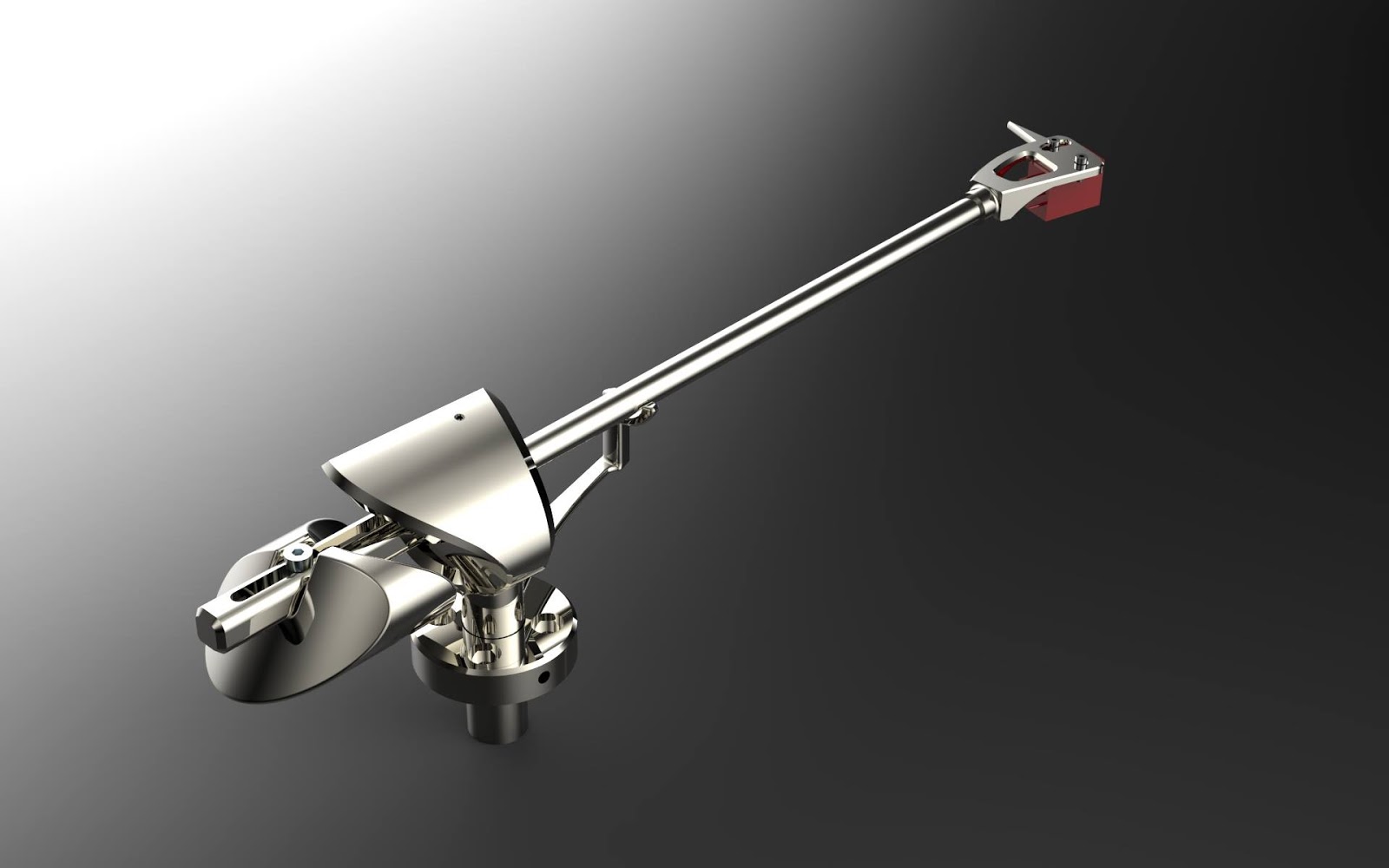
J.Sikora Kevlar 12"


First ever kevlar tonearm in the world!
The J.Sikora Kevlar 12"

It will have its official premiere during the upcoming Audio Video Show 2018. Please visit us this weekend at the National Stadium (Skybox 224). See you there!

More details about our new product very soon.

Thursday, December 14, 2017

Opus 3 Continuo new plinth design & Cantus tonearm


The OPUS 3 Continuo is the result of a lifetime's dedication to research and development in recording and reproducing the sound and atmosphere of natural, acoustic music and instruments. It has become widely accepted that the construction of a turntable greatly affects the reproduction quality of the HiFi system and even with the advent of CD, it is apparent that more of the original performance can be redeemed from an analogue recording.

At Opus3 we have the unique combination of experience in being present at the recording venue, transfering the master tape to the disc, amplifying and reproducing it through the loudspeakers, and recreating the image in the listening room.

We know that at any split moment in a recording there is a plethora of microsounds which make up the timbre, dynamics and the three dimensional presentation of the original sound. This information not only holds the obvious differences between the sax and the clarinet, but the spirit and the life - the emotion of the artists. Unfortunately, microbyte technology has not yet managed to represent these analogue sounds, but the Continuo, coupled with it's partner the Cantus parallel tracking arm. We have created a material which is a compound of crushed marble and poly- urethane that is incredibly dense and hence almost resonace free. The size and weight of the turntable combined with it's 3-rubber/air suspension mountings decouple the unit from airbourne and floor/wall vibrations feeding back from the listening environment. The isolation is further enhanced by the mineral compound used in the platter and the special felt-like mat supporting the record. This latter item is essential to cope with the standard crosssectonal shape of the LP disc (which continually varies from hole to edge) and the tremendously high forces and vibrations injected into the disc by the stylus, in its attempt to follow the modulations of the groove.

Our experience has shown that the materials used in supporting a record are audibly imposed over the reproduced image. Hence we have aimed to choose a dry or dead soundstage to attain the largest contrast between it and and the tonal colour of the music. To drive the platter we are ulitizing a simple 24vac motor coupled via a rubber belt of 3 mm dia. Two grooves in the motor pulley allow for 45 and 33 1/3 RPM simply adjusted by finger tip pressure. The motor is driven by a separate mains adaptor and is suspended within the chassis by three vibration dampers.


MK II WF  - $ 2,900.00   /  Wood Veneers / Including Standard Cantus Tonearm, Dustcover and Record Mat
MK II WF  - $ 2,000.00   /  As above, but excluding Tonearm
MK II GF  - $ 3,400.00   /  Black or White Pearl Gloss Finish / Including Standard Cantus Tonearm, Dustcover and Record Mat
MK II GF  - $ 2,500.00   /  As above, but excluding Tonearm

SE 1 - $ 3,900.00   /  Black or White Pearl Gloss Finish /Polished S1 Cantus Tonearm & Platter, AT Feet, Dustcover and Oyaide Mat
SE 2 - $ 4,300.00   /  Black or White Pearl Gloss Finish /Polished S2 Cantus Tonearm & Platter, AT Feet, Dustcover and Oyaide Mat
SE 3 - $ 4,700.00   /  Black or White Pearl Gloss Finish /Polished S3 Cantus Tonearm & Platter, AT Feet, Dustcover and Oyaide Mat


Opus 3 Cantus Parallel Tonearm Series


A tonearm's main task is to provide the cartridge with an absolute reference to the platter. Its second task is to allow the cartridge to precisely follow the advance of the disc groove, and insulate against unwanted information such as disc unevenness below the audible range. Essentially it should allow the cartridge the possibility of reading the disc information as it was originally engraved on the Master / Plate by the disc cutting lathe.

The traditional solution is to make a so-called pivot arm which has the benefit of good adherence. The disadvantage is that the pivot arm causes the pickup head to read information in the wrong place, with  high distortion as a result. The next problem is that the pivot arm is a resonator with unwanted energy artifacts. It also exhibits compatibility problems with different cartridges. This, as the sensitivity of the acoustic tube transmits mechanically trapped energy.

The Cantus represents a “rethink”, whereby the majority of the traditional problems of disc playback have been eliminated by innovative design solutions.

The first prerequisite for low distortion, is that the stylus tracks precisely in each play-subsection of the disc, as and where it was engraved by the lathe. The second premise is that the system is released from resonance, and the amplification of resonances arising in the system.

The Cantus is by design in every way free of resonances. The reduction of the resonant system makes the Cantus practically insensitive to external disturbances, acoustic feedback, and hum. It also provides a stable soundstage, when the system moving mass is low.

The requirement of fidelity is of course primordial. As such, the Cantus must be - and is - also adaptable to virtually any turntable. It must be - and is - reliable. The Cantus is simple to operate, and if an accident should occur, this is easily repaired.
​
There are 4 versions of the Cantus:

​Mk II -  $ 1,000.00   /   Including Litz Wiring
S1  -  $ 1,250.00   /   Including Litz Wiring  / Polished Aluminum / Aluminum Headshell
S2  -  $ 1,650.00   /   Same as S 1 / with on-the-Fly VTA Adjustment
S3  -  $ 1,950.00   /   Same as S 2 / with Adjustable Scale for 2nd Trolley

Additional Trolley assembly / for second Cartridge / with Wiring and DIN plug connector - $  375

Thursday, January 12, 2017

De Baer Saphir Turntable & Onyx Tonearm


€40000

Initially Kurt Baer worked in the furnishing industry where he designed technically innovative furniture for the Swiss furniture company De Sede. Furthermore he has been a Hi-Fi enthusiast with heart and soul for more than 40 years. Especially the analogous technology inspired him a lot. Therefore he often exchanged some components and was delighted with each sound improvement. During his studies and by doing several tests he found out that some technical details can be changed in such a way that the quality of the whole product could be improved.

To find out whether his ideas really increase the sound quality Kurt Baer constructed a turntable accordingly to his own plans. The outcome was overwhelming because the sound quality was remarkably higher. Afterwards he even designed and constructed a complete record player in his artist’s workshop. However Kurt Baer still tried to improve the sound quality by doing test with a SME tonearm.

In 2011 Kurt Baer met Dieter Albisser, the proprietor of the Jetmax precision engineering company. Dieter Albisser is a skilled precision engineer and has several years of experience in aircraft manufacturing and maintenance. In his company he produces precise items for machine engineering and develops components for the propulsion of unmanned airplanes.

Thus the combination of a man full of creative ideas and a man full of experience in construction yielded a totally innovative record player which was developed in 2013. Five prototypes were constructed which were sold out rapidly and for which Kurt Baer gained a lot of compliments. The record player was shown to the public for the first time at the High-End exhibition in 2015 in Munich. The expert audience was highly interested and therefore Kurt Baer and Dieter Albisser finally decided to bring their record player on the market. However they soon encountered a new challenge by constructing their own tonearm.

In autumn 2015 the brand De Baer was founded. Furthermore many small details of the record player were improved and five more components (including the tonearm) were constructed. Finally the record player was ready to be produced in series and therefore the precious De Baer record players are produced in batch size of 10 players by the Jetmax company. Dieter Albisser produces the components in high precision and Kurt Baer does the assembling and quality control.


De Baer

Monday, November 14, 2016

Tuesday, October 13, 2015

Little Fwend - Automatic Tonearm Lifter


Lifting Mechanism: Safe. Smooth. Silent. Those were the most important aspects of the design. We experimented a lot finding the right relationship between spring compression force, travel, dampening and friction. Little Fwend lifts the tonearm smooth and controlled with minimum use of force (and a little help from Newtons fwends). Little Fwend can lift tonearms with cartridges set up to 5 grams VTF.

Trigger Antenna: High carbon steel Roslau piano wire. Very low lateral force is required to release the mechanism. The cantilever will love to meet such low resistance.


Lifter Beam. Neoprene rubber. The high friction rubber padding lets the tonearm rest safely and stable even with the level a few degrees off both horizontally and vertically. If you´ve read this far, you´re probably the level type of audiophile.

Height Ranges. Little Fwend comes in two different sizes, Low and High. The Low model can be used under tonearms with clearance between the underside of the arm wand and the mounting surface as low as 30mm, up to 47mm. the High model from 47mm, up to 80mm. Height is adjusted by a set screw in the base. The appropriate hex key is enclosed. Please measure the distance from mounting/plinth surface up to the underside of tonearm wand. Take the measurement when the tonearm has correct VTA and the needle is in the groove. Add 1-2mm to this distance, to make sure there will be safe clearance between the lifter beam and the moving tonearm.


Mounting Platform. 0.3mm mild steel disc with adhesive backing. Little Fwend is fastened to the platform through magnetic force. The axially magnetized N52-magnet in the base is strong enough to keep Little Fwend in place, but weak enough to easily reorient the trigger antenna for the various run-out groove areas. Little Fwend is readjusted in seconds. The diametrical magnetic field is very low and will not affect magnetic metals in the radius of the base.

Thursday, May 8, 2014

Durand The Kairos tonearm


$6450

The Kairos™ is Durand Tonearms newest model. It will be introduced for the first time at the 2014 High-End Audio show in Munich (Germany), then will be presented to the US customers at T.H.E. Show at Newport Beach (May 30-June 1, 2014).

The Kairos™ offers all the adjustments needed to explore its full potential: VTA is adjusted with a convenient threaded collar which raises or lowers the whole bearing assembly; the VTF can be modified in fine increments; and, as in the case with the Talea™, the azimuth can be very easily adjusted on-the-fly, by turning a screw located under the main plate. Anti-skating is of course available, and can be defeated with a simple operation.

For the first time in our tonearms, we offer with the Kairos™ the option to use your own cable if you feel inclined to, and we introduce a unique feature to that effect: a DIN plug integrated in the base of the arm, to minimize the transmission of vibrations to the phono cable. The arm is sold without cable, but we offer separately a dedicated phono cable (DIN-RCA or DIN-XLR), developed specially for the Kairos™.

Faithful to our usual design philosophy, the Kairos™ is based on the simplest design and the greatest attention to the types of materials involved in the assembly, so as to guarantee maximum quality of reproduction. For the very first time in our products, the armwand is made of a specially developed blend of composite materials. The result of a long period of development, we are delighted to offer this technology, and are confident in the tonearm’s abilities to deliver far beyond its price point.


Specifications:

Effective length: 263 mm (10.35”)

Pivot-spindle distance: 247.37 mm (Loefgren A geometry).

Overhang: 15.66 mm

Offset angle: 20.81 degrees.

Cartridge mount: 1/2”

Mounting on the plinth/armboard is done with 2 x 10-24 (or M4) screws (for metal armboards) or 4 x #8 wood screws (for wood armboards).
Weight of the whole assembly: ca. 1.1 lbs (.770 kg)

Bearing: Unipivot, Swiss-made non-corrosive, non-magnetic stainless steel pivot in a sapphire jewel. The center of mass of the tonearm is in the same plane as the bearing, thus ensuring an ideal dynamic balance, without the need for the outrigger weights commonly found on other unipivot systems

VTA: fine adjustment with a threaded collar. Maximum range: 15 mm.

Azimuth: adjustable on the fly.

Anti-skating mechanism can be disabled if desired

Counterweights: 130 g, 95 g, 60 g; with additional fine adjust weight to allow adjustment of VTF in small increments (typically +/- 0.1 g). The Kairos™ is a medium mass tonearm, and the combination of counterweights provided with it allows use of most cartridges currently available. The Kairos™ has been successfully tested with cartridges from 5 to 15 grams, with compliance from 8 to 20 µm/Mn

DIN connector inside the arm base.

Jig to set the pivot-to-spindle distance provided; no need for a ruler, the jig places the tonearm exactly in the right position
Arc protractor included

Like the Telos™ and the Talea™, the Kairos™ is a medium-mass tonearm that can be used with most modern cartridges on the market.

Tuesday, March 25, 2014

Saturday, March 8, 2014

Vertere SG-1 tonearm


£1500 without arm cable

Saturday, March 1, 2014

Thales EASY and Simplicity II tonearms


$5800

Introducing their new tonearm: the Thales EASY, the Swiss company THALES TONARM expands its portfolio by producing a new model with a very high level of performance but also at a very competitive price. As expected, the inventor of the Thales tonearm (Micha Huber) has developed a tonearm with variable offset angle, based on a newly developed and highly innovative geometry.

The clever arrangement of six bearing points creates three null points for the horizontal tracking error, plus a zero point for the variable offset angle as well, which is a really novel for a tonearm design. This means the cartridge is guided along the ideal tracing line like that of a parallel tracking tonearm. This reduces side forces tremendously and is audible when listening to the EASY.

The EASY is a very compact and highly integrated design and provides a musical experience that was never possible at this price point before. The EASY was developed and manufactured based on Thales’s knowledge and expertise in producing their reference tonearm; the THALES SIMPLICITY, which has become the bench mark for more than 200 clients around the world.


$9200

Friday, February 14, 2014

Jakutis Analog of Lithuania


Milky Stork - $9950


Dalia - $9750


Black Stork - $9550


Emu - $9350


Starling - $7600


Ouzel - $6800


Sparrow - $5600

Jakutis turntables are made from high quality materials: stainless steel, bronze, brass, granite, specific woods, processed using the latest technology (cnc machining, plasma coating and others). The selection of all technical solutions is based on the given acoustical requirements. Serious consideration is given to the appearance of the turntable, as a good-sounding turntable must be also be a good-looking object in the user’s home.


Basic Concept of Jakutis Design

A very heavy table utilizing spherical rubber dampers to support a heavy sub-chassis. The sub-chassis carries a heavy platter as well as the tonearm. This assembly (the tonearm,platter and sub-chassis) constitute a single, independent structure, floating on spherical dampers. A low-power but extremely stable synchronous motor is located on the table and drives the platter via a belt.

Turntable Core Parts

1. Stand and Table:

Some turntables ( Stork and Dalia, for example ) have legs, because they are heavy , thus they do not require additional stands or tables. The legs are made of stainless steel tubes, filled with acoustic damping material. The stands can be leveled by tuning the spiked feet of each leg. The legs support a 60mm (Dalia, Milky Stork) or 40mm (Black Stork) thick table, measuring 470x 470mm and made of granite . The lower part of the legs is combined 30mm (Dalia, Milky Stork) or 20mm (Black Stork) thick granite panel. The foot spikes sit on flat pads.

2. Sub-chassis:

All turntables have one of two types of sub-chassis : conical, made of marble with triangular frame ( Milky Stork, Black Stork, Dalia ) or plate-type, made of granite ( Starling, Ouzel ). A triangular frame is made of stainless steel tube which is then filled with an acoustic damping material. Marble was chosen because for its good acoustic and mechanical properties. Plate type granite can be made of Matrix Anticato (Starling). This naturally occurring composite stone was formed during the cooling of molten lava, and has a laminated structure; it is well suited to the damping of ambient vibrations. The plate-type sub-chassis (see Emu ) can accommodate two or three tonearms.

3. Suspension:

The sub-chassis rests on spherical elastic dampers which in turn rest on machined bronze supports. The height of each support can be adjusted to level the platter. The dampers themselves, being spherical, absorb shock from all sides equally. Dampers of varying elasticity are available and are easily replaced.

4. Magnetic Bearing:

The bearing is a classic type – a 9mm steel shaft within a steel sleeve. The outer surface of the shaft and inner surface of the sleeve are precisely polished. The difference is that tip of shaft rests not on steel or ceramic ball, as usual, but on magnetic pillow, created by two neodymium magnets. This eliminates hard mechanical thrusts between the shaft and bottom of bearing and reduces vibrations of the platter. As the diameter of magnets is only one inch and the distance to tonearm is long, this does not affect the cartridge. The assembly is located in a 35mm diameter stainless steel housing that is filled with oil.

5. Motor:

The platter is driven by a low-speed (250 rpm) synchronous Crouzet motor, mounted to 5 a kg bronze body in a stainless steel housing.

6. Platter:

The platter can be made of brass, brass with acrylic insert, aluminum with acrylic insert. Diameter of platter – 320mm , weights about 10 kg.


$1750

Oil damped unipivot tonearm

Statically balanced

Bearing: carbide tungsten point on sapphire thrust pad

Effective mass: 14 grams

Down force: 10 ÷ 30 mN

Cartridge balance range: 5 ÷ 32 grams

Armtube: Red Cedar

Effective length: 12”

Mounting distance: 11.64”

Overhang: .52”

Offset angle: 17.6º

Weight : 670 grams

Fine VTA adjustment on the fly

Azimuth adjustment

Stand with VTA-lifter made of stainless steel

Central shaft made of bronze